
Anúncios
When a resume is scanned by an Applicant Tracking System (ATS), it looks specifically for relevant keywords that match the job description.
Using the right keywords helps a resume pass initial screenings and increases the chance of reaching a human recruiter.
These keywords typically include industry-specific skills, job titles, and action verbs that reflect the candidate’s experience and qualifications.

Many job seekers make the mistake of using generic language instead of targeted keywords that match the roles they want.
Understanding which terms to include can make a significant difference in how the ATS ranks the resume.
Understanding ATS Systems

ATS systems scan resumes using specific rules and filters.
They analyze structure, keywords, and relevant experience.
This automation helps recruiters quickly identify qualified candidates.
How ATS Works
An ATS (Applicant Tracking System) parses resumes by extracting key data like contact details, work history, and education.
It converts text into structured information and stores it in a database for easy searching.
The software ranks candidates based on keyword matches and relevance to the job description.
Resumes lacking necessary keywords or appropriate formatting may be rejected automatically.
Importance of Keywords in ATS
Keywords are the specific terms and phrases that ATS scans for to gauge candidate suitability.
They often include job titles, skills, certifications, and industry jargon.
Using relevant keywords increases the chance a resume will pass initial screening.
Overloading resumes with keywords can harm readability, so strategic placement is essential.
Applicants should mirror language from the job listing without generic filler.
Common ATS Features
Most ATS systems include resume parsing, keyword scanning, and candidate ranking.
They often support Boolean searches that help recruiters filter applicants by multiple criteria.
Some systems integrate communication tools for scheduling interviews and tracking applicant progress.
Reporting and analytics features allow HR teams to measure hiring efficiency.
Customizable workflows enable recruiters to set different stages and automated responses.
Identifying Relevant Resume Keywords
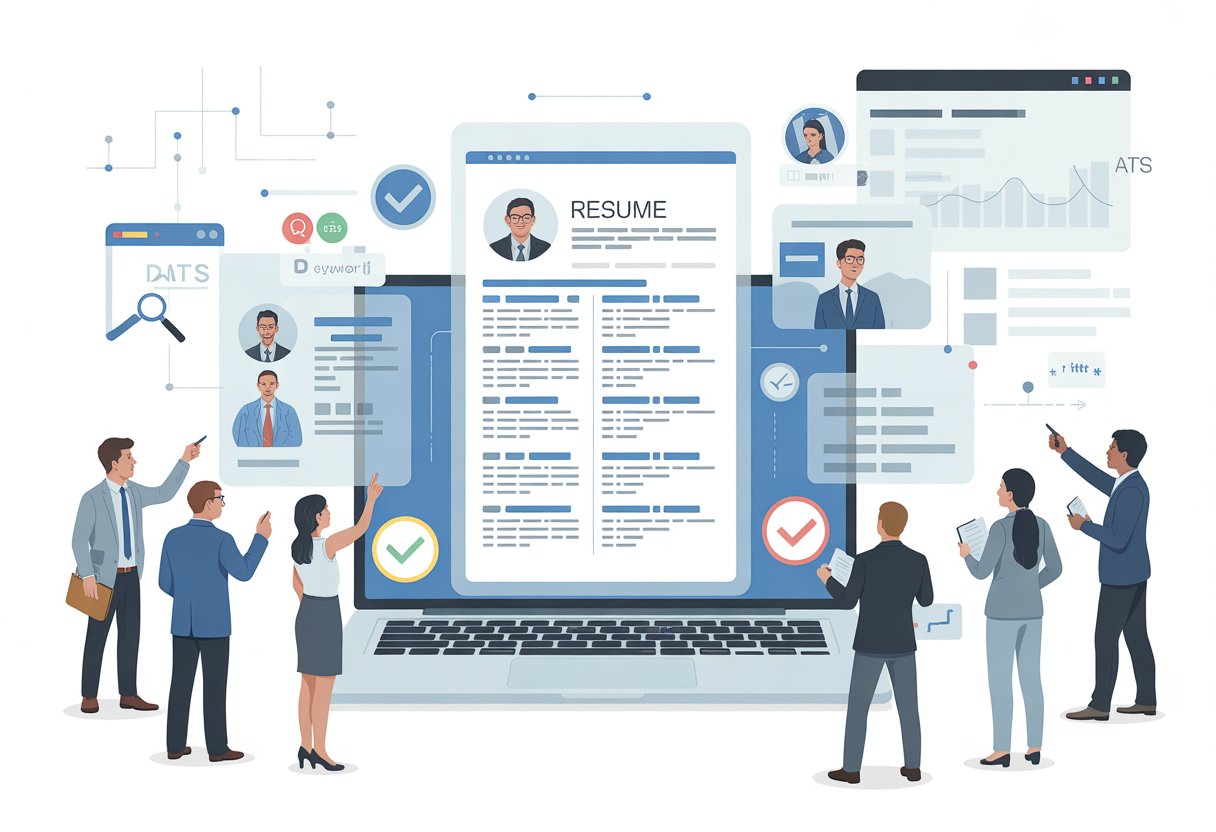
Selecting the right keywords requires understanding the types of language employers and Applicant Tracking Systems (ATS) expect.
It also means using words that match industry demands and specific job roles.
Types of Keywords: Hard Skills vs. Soft Skills
Hard skills are measurable abilities like software proficiency, technical knowledge, or certifications.
Examples include Python programming, data analysis, or project management.
These keywords often exist as exact phrases in job descriptions, so exact matches improve ATS ranking.
Soft skills refer to personal traits or interpersonal abilities, such as communication, problem-solving, or team leadership.
While harder to quantify, soft skill keywords can highlight cultural fit and complement hard skills.
Candidates should balance both types but prioritize hard skills that directly relate to the job, since ATS primarily scans for these to assess qualifications.
Industry-Specific Keywords
Keywords should reflect terminology unique to the candidate’s professional field.
For healthcare, words like patient care, HIPAA compliance, or clinical research are essential.
In finance, terms such as financial modeling, risk assessment, or GAAP standards are relevant.
Using common jargon or certifications recognized within the industry signals expertise.
Industry keywords may include software specific to the sector, regulatory terms, or methodologies applied regularly.
Customizing resumes with these terms increases the likelihood of meeting ATS filters and catching recruiter attention.
Job Title and Role-Specific Terminology
Specific job titles often come with expected keywords.
For example, a marketing manager should include SEO strategies, content marketing, and campaign analytics.
A software developer might use JavaScript, API integration, or agile methodology.
Role-specific keywords relate to the tasks and tools associated with the position.
Reviewing job descriptions for frequently repeated phrases helps identify these terms.
Aligning resume keywords precisely with the job listing improves both ATS scores and recruiter recognition of a candidate’s fit.
Optimizing Resume Content for ATS
A resume must be carefully crafted to pass ATS scans while clearly communicating qualifications.
The right keywords should be placed thoughtfully, avoiding excessive repetition.
It is also critical to tailor keywords precisely to each job description.
Strategic Keyword Placement
Keywords should appear in key resume sections like the summary, work experience, and skills.
The summary is a prime spot because ATS often give it strong weight.
Integrating keywords naturally within job responsibilities ensures the resume reads well to both ATS and humans.
Using bullet points to highlight achievements with keyword phrases increases clarity.
For example, writing “Managed digital marketing campaigns” is better than a vague “Responsible for marketing.”
Including industry-specific jargon where relevant helps convey expertise without overusing generic terms.
Avoiding Keyword Stuffing
Overloading a resume with keywords can look unnatural and may trigger ATS filters for keyword stuffing.
Keywords must fit seamlessly in context rather than being forced.
Repetition of a single keyword dozens of times reduces readability and can lower the resume’s ranking.
Instead, synonyms and related terms can be used to maintain keyword density without redundancy.
For instance, alternating “project management,” “project coordination,” and “project leadership” provides variety.
Maintaining a balance between keywords and meaningful content benefits both ATS parsing and recruiter review.
Matching Keywords to Job Descriptions
Each job listing uses unique terminology and emphasizes specific skills.
Identifying these terms and mirroring them in the resume increases ATS compatibility.
Keywords should be copied exactly as they appear, including acronyms and alternate spellings.
Attention should be paid to required skills, certifications, and software mentioned.
If a job post repeatedly references “Salesforce CRM,” the resume should include that exact phrase rather than a generic “CRM experience.”
This targeted approach aligns the resume closely with the employer’s expectations.
Top Keyword Categories for ATS Success
Selecting the right keywords boosts a resume’s chances of passing ATS scans.
Keywords should reflect the applicant’s active contributions, relevant skills, and formal credentials.
Each category targets a distinct element that ATS algorithms prioritize in ranking candidates.
Action Verbs
Action verbs highlight accomplishments and usually start bullet points.
They show initiative and measurable results rather than vague duties.
Examples include managed, developed, implemented, and led.
Using varied and strong verbs helps ATS recognize the candidate’s impact within roles.
Employers look for dynamic language indicating leadership, problem-solving, or growth.
Passive phrases like “responsible for” do not perform as well in ATS searches.
Tailoring action verbs to the job description ensures alignment with what recruiters want to see.
Core Competencies
Core competencies are specific skills or areas of expertise related to the job.
Examples are data analysis, project management, software proficiency, or customer service.
These terms must be directly relevant and commonly used in the industry sector for recognition by ATS.
Listing competencies in a dedicated section improves scanability.
They can also be woven naturally into work experience descriptions.
Exact phrase matches between the resume and job posting increase the chances of passing ATS filters.
Certifications and Qualifications
Certifications validate technical skills and professional standards.
ATS scanning prioritizes recognized credentials such as PMP, CPA, AWS Certified Solutions Architect, or First Aid Certification.
Including dates and certifying bodies adds credibility.
Qualifications like degrees or licenses relevant to the role can also be keywords.
For example, a resume for a legal role should list JD or bar admission.
Ensuring these are prominently placed helps the ATS assign higher relevance to the candidate’s profile.
Customizing Keywords for Different Roles
Adjusting keywords based on the specific role improves the chance of passing ATS filters.
This requires focused examination of job descriptions, attention to industry-specific language, and understanding what companies prioritize in candidates.
Tailoring Keywords per Application
Each job application demands a tailored set of keywords linked closely to the position’s core responsibilities.
Candidates should align their resume terms with the exact skills and qualifications mentioned in the job posting.
For example, if a posting asks for “project management” and “stakeholder communication,” these precise phrases should appear in the resume.
Using synonyms or unrelated terms reduces ATS ranking.
Emphasizing measurable achievements using keywords also helps.
Stating “led a team of 10” or “increased sales by 15%” supports keywords with concrete results, making the resume more relevant to automated filters and human reviewers alike.
Researching Job Postings
Analyzing multiple job postings for the same role uncovers commonly repeated keywords and phrases.
These consistently mentioned terms indicate what ATS prioritizes.
Applicants should compile a list of these terms across 5 to 10 listings.
Patterns such as preferred certifications, technical skills, or industry jargon become clear.
For example, a data analyst role may consistently highlight “SQL,” “data visualization,” and “Python.”
Candidates then ensure these keywords appear naturally in their resumes rather than using vague language.
Analyzing Company Culture Terms
Beyond skills and qualifications, keywords reflecting company values and culture can improve ATS success.
Some ATS systems scan for cultural fit through specific attributes or soft skills.
Applicants should review the company’s website, mission statement, and social media channels to identify relevant terms like “collaborative,” “innovative,” or “customer-focused.”
Including these keywords in contexts such as work style, team contributions, or personal strengths signals alignment with the employer’s culture.
This can boost the chances of progressing past ATS and impress recruiters.
Tools and Resources for Keyword Optimization
Effective keyword optimization relies on precise research and thorough testing against applicant tracking systems (ATS).
There are specific tools designed to identify relevant keywords and platforms to test how well a resume performs in ATS scans.
Keyword Research Tools
Keyword research tools help identify the exact terms recruiters and ATS prioritize.
Tools like Jobscan analyze job descriptions and compare them to the resume, highlighting missing keywords.
LinkedIn’s job search feature offers insights by displaying frequently used skills and terms in posted roles.
Other helpful tools include Ubersuggest and Google Keyword Planner, which provide data on term popularity and related keywords.
Utilizing these resources allows candidates to tailor resumes with industry-standard language, increasing ATS compatibility.
Resume Scanning Platforms
Resume scanning platforms simulate ATS to assess keyword effectiveness.
Jobscan is a leading tool that scores resumes against specific job listings, indicating areas for improvement.
It highlights where keywords are missing and how to optimize formatting for better ATS reading.
Resumeworded evaluates resume content and keywords, offering actionable advice.
Some platforms use AI to mimic real ATS systems, making them valuable for iterative testing.
These tools help ensure resume content aligns with what automated systems seek.
Measuring Resume Keyword Effectiveness
Resume keywords must be evaluated regularly to ensure they align with job descriptions and ATS requirements.
Monitoring how well keywords perform allows candidates to improve their chances of passing automated screenings.
Tracking ATS Compatibility
Tracking ATS compatibility involves using tools designed to simulate how applicant tracking systems read resumes.
Platforms like Jobscan or ResumeWorded compare a resume against job postings to identify keyword gaps.
Candidates should upload both their resume and the target job description for a detailed keyword match report.
Key metrics to watch include:
- Keyword Match Percentage
- Missing Skills or Phrases
- Relevance of Industry Terms
These insights help optimize the resume’s structure and language so it fits the ATS criteria.
Repeating this process with multiple job descriptions can show trends and improve overall effectiveness.
Updating Keywords Over Time
Keywords must be refreshed regularly to stay relevant in changing job markets.
Job descriptions evolve as new skills and technologies emerge, requiring resumes to adapt accordingly.
Setting a schedule, such as quarterly reviews, allows candidates to incorporate recent industry terms or updated certifications.
This may involve:
- Adding new software skills
- Reflecting current job titles
- Including emerging industry buzzwords
Maintaining an updated keyword list prevents resumes from becoming outdated and increases the likelihood of passing ATS filters in future applications.
Common Mistakes to Avoid When Choosing Keywords
Choosing the wrong keywords can reduce a resume’s chances with ATS filters.
It is crucial to select terms that accurately reflect skills and experiences while aligning with the job description and industry standards.
Using Generic Phrases
Generic phrases like “hard-working,” “team player,” or “detail-oriented” provide little value for ATS.
These terms are too broad and commonly found in many resumes, making them ineffective for standing out in automated scans.
Instead, candidates should focus on specific skills, tools, and achievements.
For example, replacing “detail-oriented” with “data accuracy verification” adds measurable and precise information.
ATS systems rank resumes higher when keywords match the job’s technical and functional terms.
Relying on Buzzwords
Buzzwords such as “synergy,” “go-getter,” or “think outside the box” do not help ATS rank resumes.
These terms are often vague and overused without demonstrating clear qualifications or results.
Employers and ATS prefer actionable, relevant keywords that describe actual expertise and responsibilities.
For instance, “project management,” “Python programming,” or “sales forecasting” illustrate concrete skills and knowledge.
Substituting buzzwords with tangible credentials strengthens keyword effectiveness.
Ignoring Industry Language
Neglecting industry-specific terminology limits a resume’s visibility in ATS scans.
Each sector has standard jargon and acronyms that systems use to filter candidates.
Using niche keywords and phrases from the job posting enhances compatibility.
If applying for a marketing role, terms like “SEO strategy,” “content calendar,” or “Google Analytics” are essential.
Ignoring these terms risks missing automated screening, even with strong qualifications elsewhere.
Conclusion
Using the right keywords is essential to ensure a resume passes through ATS systems effectively. Candidates should focus on industry-specific terms and relevant skills listed in the job description.
Incorporating action verbs and measurable achievements can further improve how a resume is ranked by ATS algorithms. Consistency in formatting and language helps avoid errors.
Tips to maintain keyword relevance:
- Review job postings regularly
- Use exact phrases from the description
- Avoid keyword stuffing, keep language natural